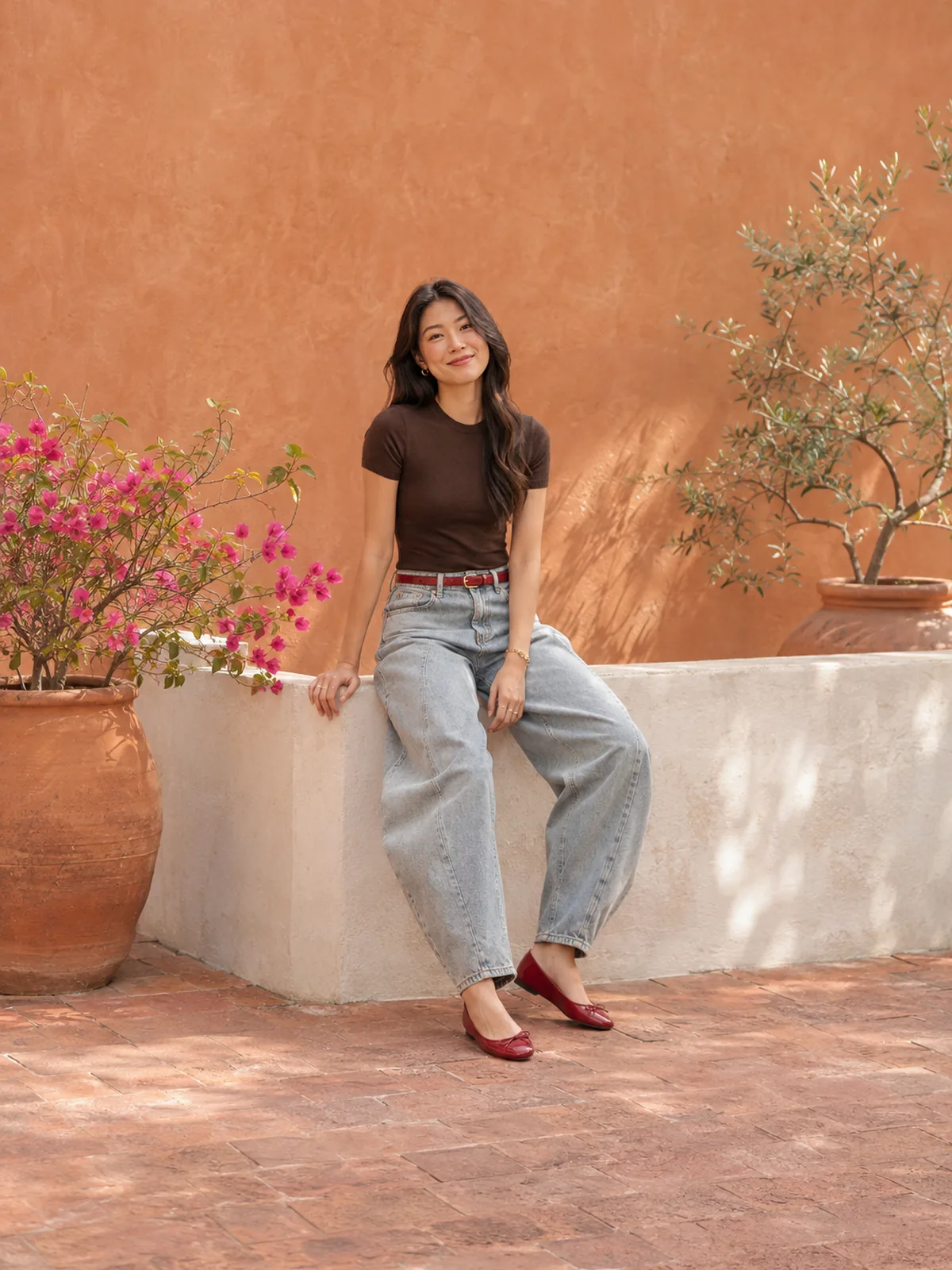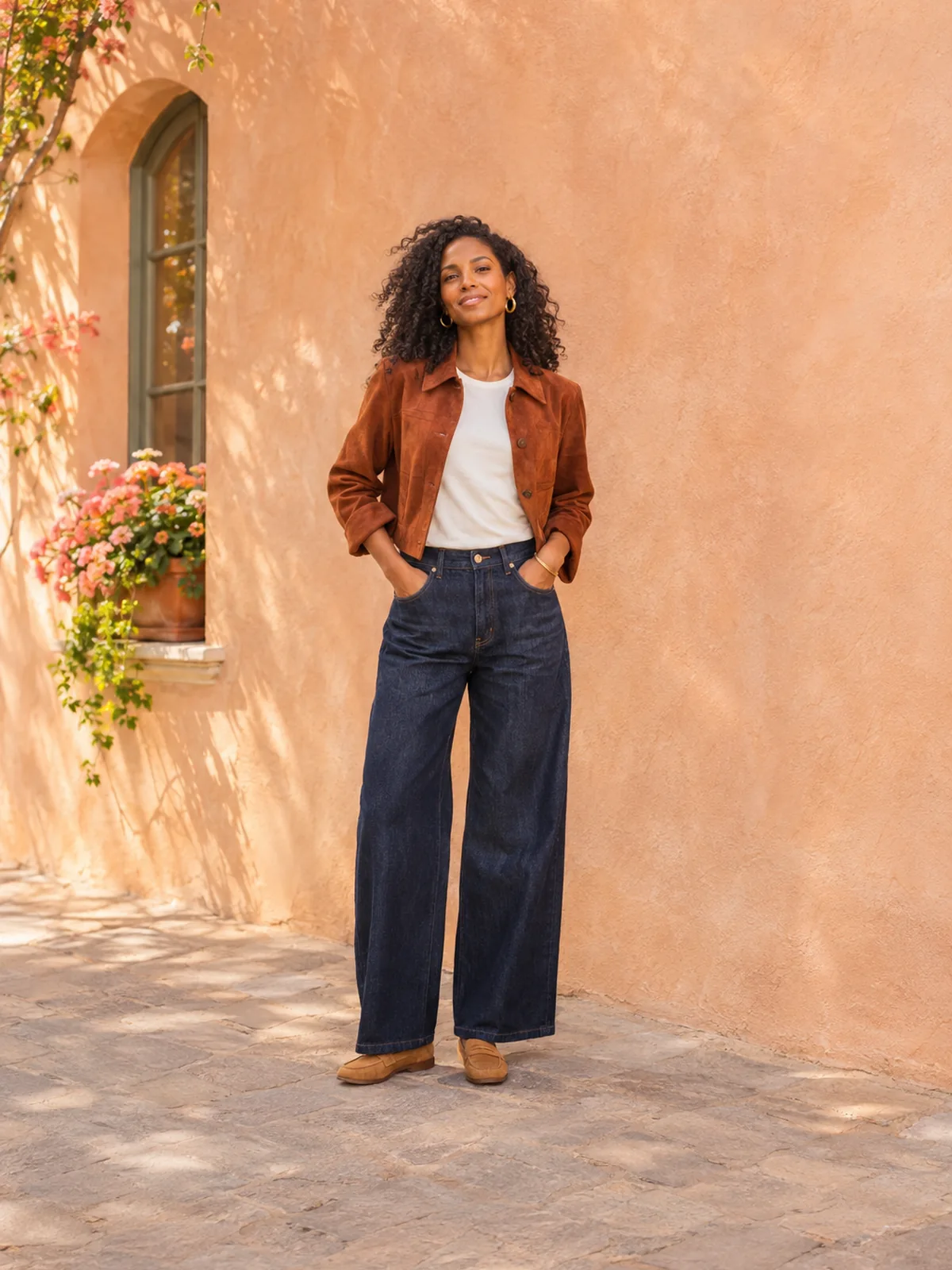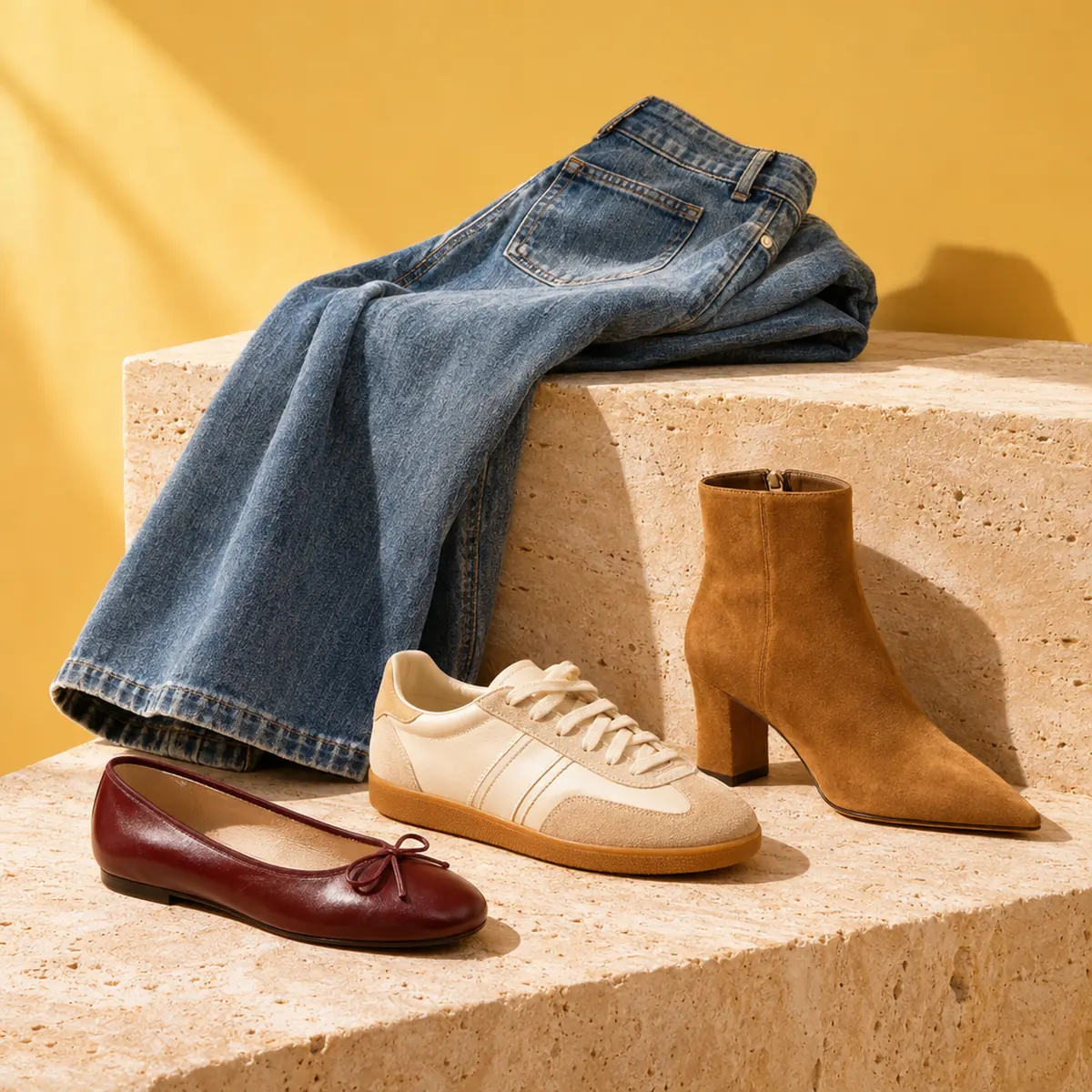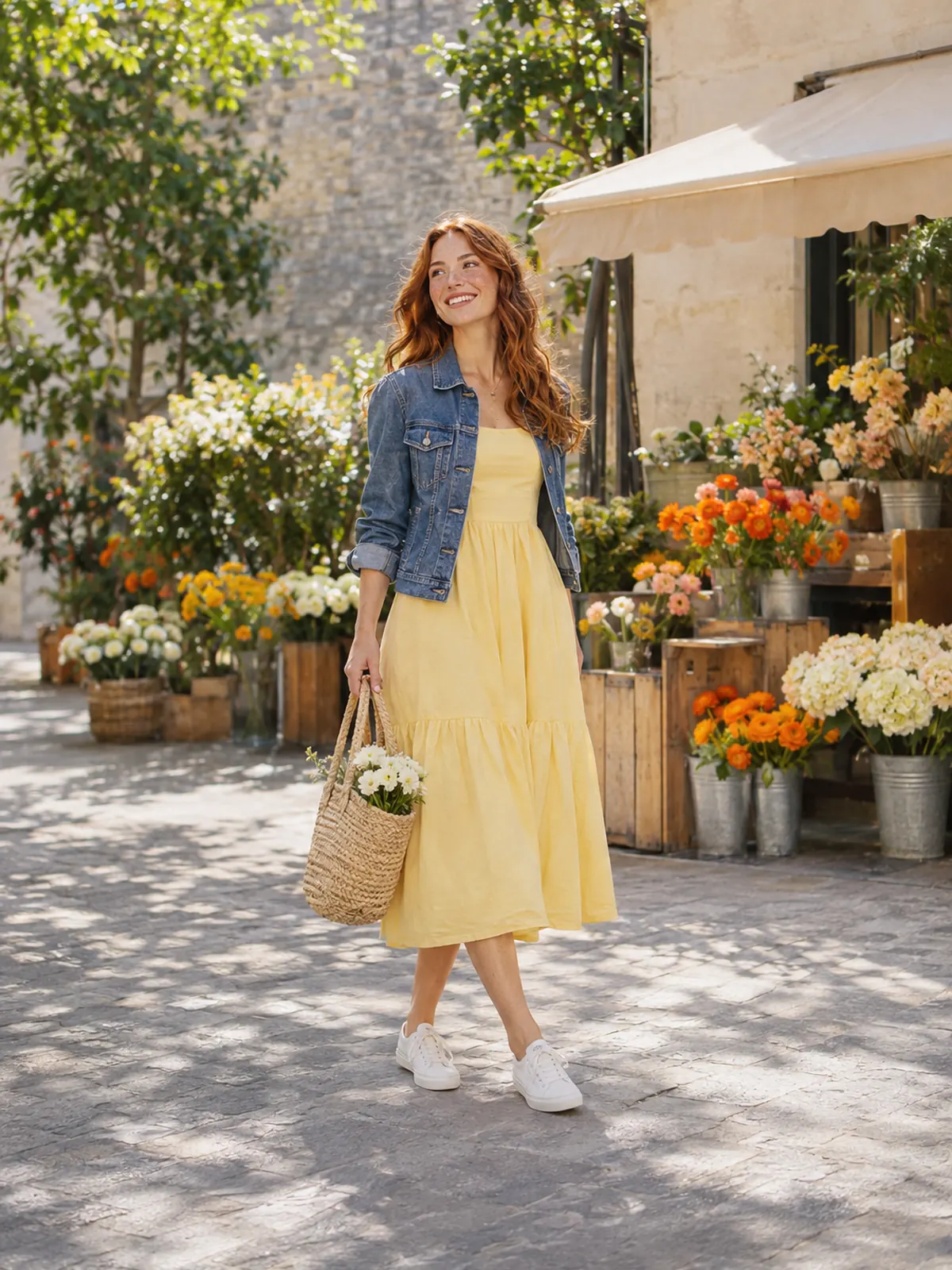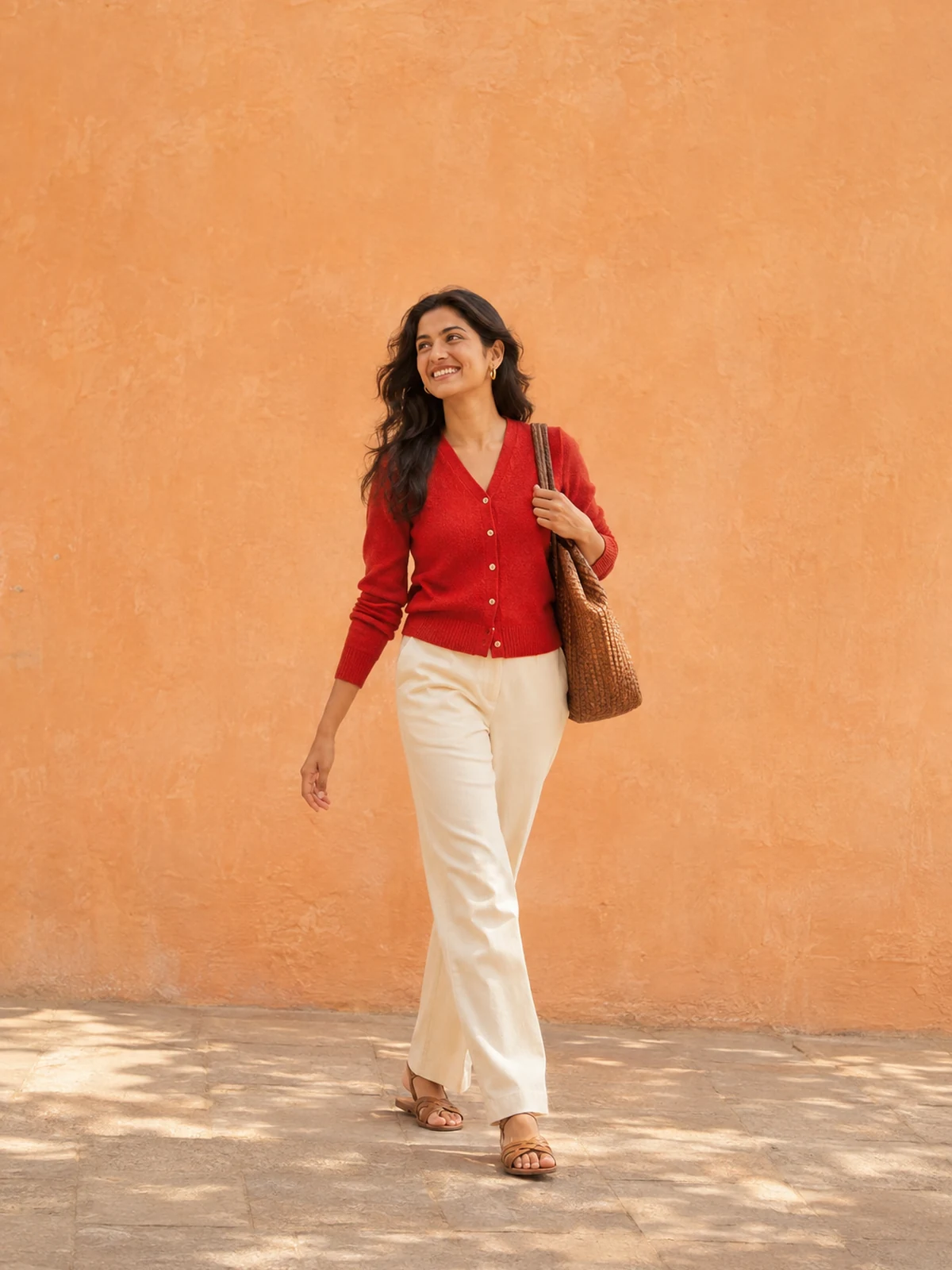
The easiest outfit ideas start with your plans, then pair a reliable base with shoes and a layer suited to the day. Try jeans with a tee and open shirt for errands, trousers with a knit for a smarter lunch, or a dress with a cardigan when you want fewer pieces to coordinate. These twelve combinations use familiar clothing, with swaps to help you adapt them instead of copying a look exactly.
This guide may contain affiliate links. As an Amazon Associate we earn from qualifying purchases. How our links work.
Choose the day's constraints before the clothes
Check the forecast, your walking plans, and any dress code. Decide what has to work: sitting on public transport, carrying a laptop, staying comfortable outside, or moving between warm and cool spaces. Choose shoes early because they often determine hem length and how practical an outfit feels. A beautiful combination that fails the day's basic requirements is not the best starting point.
Use the fashion hub to explore individual garments when a formula needs more detail. Here, treat each look as a set of relationships rather than a shopping list. A button-up shirt can replace an overshirt if the weather is mild, and comfortable trousers can replace denim if you prefer. Try the nearest equivalent already in your closet.
1. Jeans, a plain tee, and an open shirt
For errands or a casual coffee, combine blue jeans, a white or gray tee, and a button-up left open. Add sneakers and a bag that carries what you need without constant adjusting. The open shirt provides a light layer and a visible vertical line. If both shirt and jeans are roomy, compare a shorter tee or a shallow front tuck to keep fabric from gathering at the waist.
With broad denim, make sure the back hem clears your heel. Our guide to how to style wide leg jeans covers the fit and length details that make this simple combination easier.
2. Straight trousers, a knit, and loafers
Try charcoal trousers with a pale-blue knit and loafers for a lunch, appointment, or office that allows this level of dress. Leave the sweater untucked if it hangs cleanly; tuck only a thin knit if you prefer a visible waistband. Add a coat when needed. If the loafer slips or rubs during a short indoor walk, use another comfortable shoe rather than hoping it will improve during the day.
3. A simple dress with a cardigan
Choose a dress that lets you sit and move comfortably, then add a cardigan that works with its sleeve volume. A fine cardigan may feel cramped over puff sleeves, while a roomier knit can accommodate them. Flat boots make a cool-weather version; secure sandals suit milder conditions. Check the dress in motion, especially if wind or stairs are part of your route. A hands-free bag keeps this combination practical rather than fussy.
4. A midi skirt, tee, and denim jacket
Pair a fluid skirt with a plain tee and a denim jacket for an easy contrast of soft and structured fabrics. Start with a jacket ending near the waist or upper hip, then compare a longer one if you prefer more coverage. Sneakers keep the outfit casual. If the skirt catches around your legs, check the fabric's care guidance before trying any treatment; static and a restrictive fit are different problems.
See how to style a denim jacket for more ways to adjust this layer without changing the entire outfit.
5. Relaxed trousers with a tank and light shirt
For a warm day, try loose trousers, a tank, and a lightweight shirt you can wear open or closed. Choose sandals that stay secure when you walk. A woven bag is optional, not essential to making the combination feel summery. Check whether pale trousers become more transparent in daylight, and choose underlayers you find comfortable. Roomy clothing can improve ease of movement, but fabric weight still affects how warm the outfit feels.
6. Dark jeans, a blouse, and a simple flat
For an informal dinner, use dark denim as the base and add a blouse with one detail you enjoy: texture, a soft neckline, or a sleeve shape. Keep the shoe uncomplicated so you can judge the blouse and jeans together. A flat can look intentional without imitating a heel. If the venue has a dress code, check it first; dark jeans are not automatically appropriate for every restaurant or evening event.
7. Barrel jeans and a short cardigan
Pair curved-leg jeans with a cardigan that meets or overlaps the waistband and a low-profile sneaker. This makes the denim shape the main visual feature. Button the cardigan only as you find comfortable, or wear it open over a base layer. If the tapered hem sticks on the shoe, compare another profile before rolling it several times. Our barrel jeans styling guide explains how to work with that narrower opening.
8. A matching set with different accessories
A coordinating shirt-and-trouser or knit set removes one color decision, but it still needs a practical shoe and layer. Try the set with sneakers and a crossbody bag for travel, then compare loafers for a different feel. Wear each piece separately too: the top may work with denim, while the trousers can pair with a plain tee. If you do not own a set, two pieces in related tones can create a similarly connected look.
9. Shorts, a striped top, and flat sandals
Choose shorts with a rise and length that feel comfortable when seated, then add a striped tee or shirt. Keep the top untucked or make a loose tuck depending on the fabric. A light overshirt can help with changing temperatures. For extended outdoor time, think beyond the outfit's appearance: the American Academy of Dermatology recommends sun-protective clothing and other sun protection measures. Ordinary lightweight fabric is not automatically equivalent to a garment with a stated UPF rating.
10. A long-sleeve tee, trousers, and a rain layer
On a wet commute, begin with footwear appropriate for the conditions and trousers that stay clear of the ground. Add a long-sleeve tee and a rain layer with enough room for your bag straps and any knit underneath. Test the hood before leaving if you plan to use it. A short, dry hem is more useful than a floor-skimming one, and you can carry different indoor shoes if your plans require them.
11. A tonal outfit with one texture contrast
Combine pieces in related shades, such as navy trousers, a blue shirt, and a dark knit. Exact matching is unnecessary. Use texture to distinguish the layers: smooth trousers beside a ribbed sweater or a soft tee under a crisp shirt. If the result feels flat, change one surface or introduce a contrasting shoe rather than adding many colors at once. This formula also works with brown, green, gray, or brighter colors you already wear. In cold weather, a single velvet piece is an easy texture contrast; see our velvet outfits guide for blazer, trouser and flat combinations.
12. Familiar basics with one expressive piece
Use your most reliable jeans-and-top combination, then add one item you love but rarely wear: a patterned jacket, a colorful bag, or a distinctive pair of earrings. Keep the other pieces familiar so you can notice what the new element changes. If the outfit feels crowded, remove another detail rather than discarding the expressive piece immediately. This is a useful way to bring neglected favorites back into rotation without buying an entirely new look.
Save the combinations that survive a real day
Take a quick outfit photo and note anything that needed adjusting: slipping shoes, a pinching waistband, sleeves that did not fit under the coat, or a hem that caught on stairs. Keep the combinations that worked and revise the specific problem in the others. Our minimalist capsule wardrobe guide turns this process into a small repeatable wardrobe. Follow each garment's care label so useful pieces are ready when you need them.
Your questions, answered
How do I find outfit ideas without buying new clothes?
Start with a combination you already wear, then change one element: the layer, shoe, tuck, or accessory. Photograph versions that work and keep a short list for days when choosing feels difficult.
How can a simple outfit look more put together?
Check fit, hem length, and whether the layers sit comfortably together. Repeat one color or add a deliberate texture contrast if you like. You do not need a belt, jewelry, or a formal shoe in every outfit.
What should I wear when the temperature changes during the day?
Use removable layers that fit over one another, and choose a bag that can hold the layer you take off. Check the forecast and test the full combination, including your outerwear, before leaving.
Sources & further reading
- American Academy of Dermatology: What to Wear to Protect Your Skin From the Sun
- Federal Trade Commission: Clothes Captioning—Complying with the Care Labeling Rule
Sources support the factual guidance they address; aesthetic suggestions are editorial judgment, not claims of product testing.