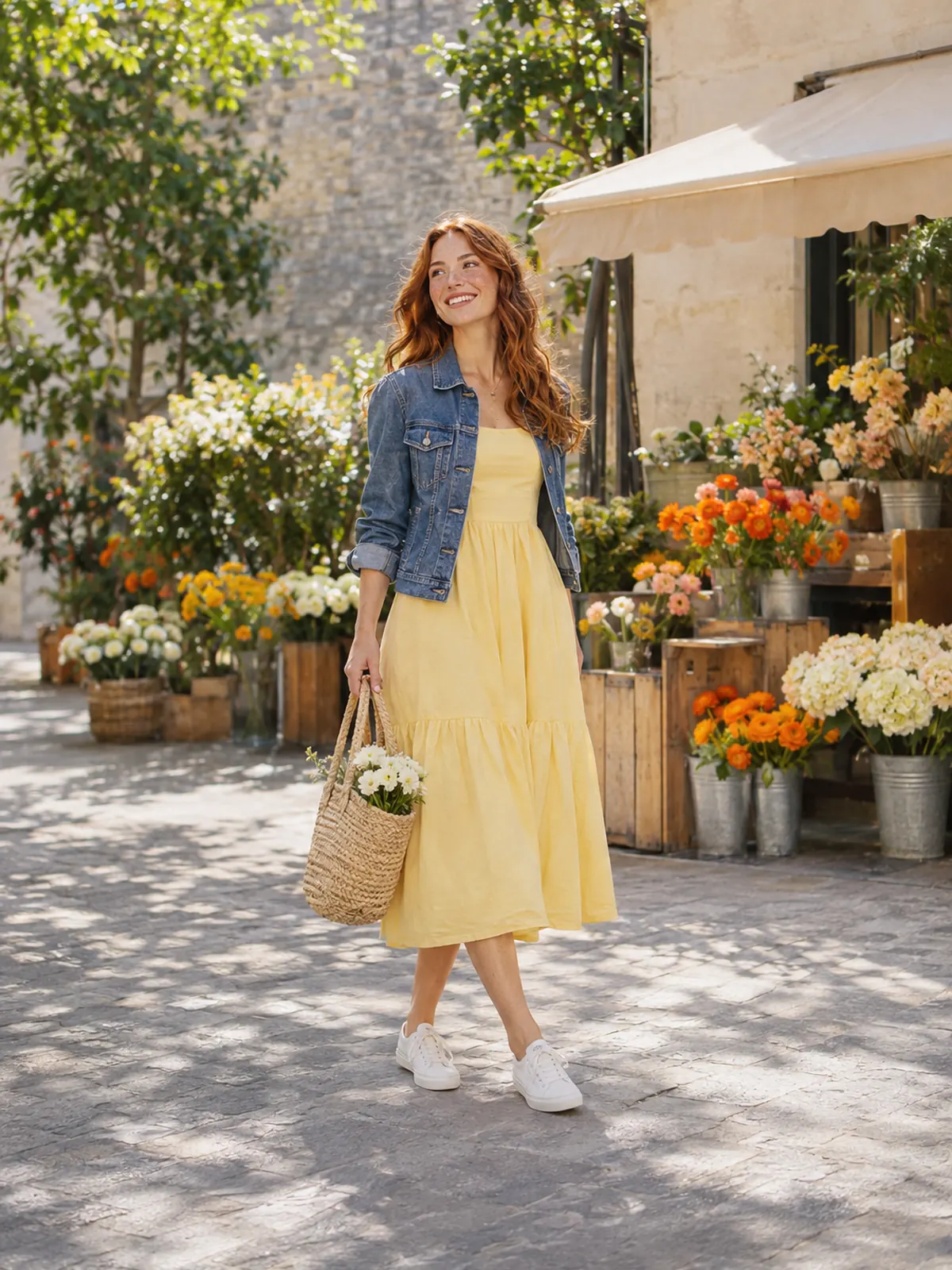
To style a jeans jacket, treat it as a casual outer layer and balance its width and length against the clothes underneath. A hip-length jacket works with straight trousers, a cropped shape highlights a higher waist, and a roomy jacket leaves space for a sweater. Start with a simple base, then choose shoes and one finishing detail that suit what you are doing.
This guide may contain affiliate links. As an Amazon Associate we earn from qualifying purchases. How our links work.
Find the jacket's useful fit
Try your jacket over the layer you actually plan to wear, not just a thin top in a fitting room. Reach forward, sit down and cross your arms. The shoulders should allow comfortable movement, and the cuffs should not cover your hands unless you deliberately want that longer shape. Check the side view with the jacket open and closed.
There is no single correct hem length. A cropped jacket leaves more of a high waistband visible; a longer one creates a straighter line over the hips. A roomy cut is useful for layering, while a closer cut can sit neatly over a fine knit. For more combinations built around what you own, visit our fashion hub.
Formula 1: straight trousers and a simple tee
Pair a mid-blue jacket with dark straight trousers, a plain T-shirt and clean low-profile sneakers. The trousers add a sharper line without making the outfit formal. Leave the jacket open so the center of the outfit is visible, and keep the T-shirt hem close to the waistband if you want an uncomplicated proportion.
This is a useful everyday starting point because you can change one element at a time. Swap sneakers for loafers when you want a more polished finish, or choose a soft knit instead of the tee in cooler weather. A small shoulder bag or a practical tote is enough; extra accessories are optional rather than the step that makes the outfit complete.
Formula 2: wide-leg jeans with contrasting denim
Double denim is easier to read when either the wash or the silhouette changes. Try a shorter pale-blue jacket with darker wide-leg jeans and a white or charcoal top. The contrast separates the pieces, while the open jacket keeps the outfit from looking like one solid block. The washes do not have to match perfectly.
If both pieces are roomy, expose a bit of the waistband with a shorter top or a comfortable partial tuck. You can also choose a less oversized jacket instead of trying to cinch everything. Our wide-leg jeans styling guide has more ways to balance the leg shape. Check that the jean hems clear the ground with your chosen shoes.
Formula 3: a dress and an open jacket
A denim jacket can make a simple dress feel more casual without hiding its whole shape. Over a fuller skirt, try a jacket that finishes near the waist or high hip. Over a straight dress, a longer cut can work as a loose outer layer. Compare both in a mirror rather than assuming every dress needs a cropped jacket.
Use the shoes to decide how dressed up the combination feels. Flat sandals or sneakers suggest daytime; simple boots can make it useful in cooler weather. If the dress has puff sleeves, check whether they bunch inside the jacket. An attractive outline is less useful if the upper arms feel restricted whenever you reach for something.
Formula 4: a hoodie and relaxed trousers
Choose a jacket with enough room for the hoodie's shoulders and sleeves, then add straight or relaxed trousers. Pull the hood out so it lies comfortably rather than forming a lump at the neck. Keep the layers relatively light if you will be moving between warm indoor spaces and cool outdoor air.
If the combination feels bulky, change the underlayer before deciding the jacket is wrong. A thin sweatshirt can give a similar relaxed effect with less bunching. Avoid forcing thick ribbed cuffs through tight denim sleeves. Wear shoes suited to your route and the weather; the jacket does not turn ordinary sneakers into rain footwear.
Formula 5: a skirt with one clear proportion
With a midi skirt, start by showing where the waist sits. A tucked tee and shorter jacket can make a full skirt's volume easier to see. If you prefer a longer jacket, leave it open over a relatively simple top so the layers do not all end at the same point.
For a straighter skirt, a slightly roomy jacket can provide comfortable contrast. Try sitting and walking before heading out, especially with a narrow hem. The goal is an outfit you can move in, not a rigid rule about which body shape is allowed to wear which length. Use color repetition in your shoes or bag if you want the pieces to feel more connected.
Formula 6: dark denim with a tonal base
A charcoal or dark-indigo jacket over a similarly toned top and trousers creates a quieter alternative to pale blue. Different textures help the pieces remain distinct: a soft jersey tee, woven trousers and denim can sit together without an exact color match. Check the colors in daylight if a near-match looks strange under indoor bulbs.
This combination is useful when you want fewer visible contrasts, but dark denim is not a substitute for a formal blazer. Follow the dress expectations of the setting. If you are building a smaller rotation, the minimalist capsule wardrobe guide can help you choose a jacket color that works with several bottoms instead of only one outfit.
Formula 7: shorts with a longer top layer
For mild weather, combine tailored or relaxed shorts with a plain top and an open denim jacket. Check that the shorts remain visible beneath the jacket when standing and walking if that matters to you. A slightly shorter jacket creates a clearer break; a longer one offers more coverage without requiring everything underneath to be fitted.
Keep the underlayer breathable for your conditions and carry the jacket when it becomes too warm. Denim weight varies, so a heavy jacket can feel cumbersome even if its sleeves are rolled. Use a light cuff rather than building a thick roll at the elbow. If the fabric resists folding comfortably, leave it down or choose another layer.
Formula 8: a knit and boots for cooler days
Layer a jacket over a fine sweater with straight jeans or trousers and comfortable boots. Allow room at the shoulders and underarms so the knit does not bunch. A scarf can add warmth at the neck, but avoid packing so much fabric beneath the collar that the jacket no longer sits comfortably.
For genuinely cold, wet or windy weather, add suitable outerwear or choose a different coat. A denim jacket's appearance does not tell you its insulation or weather resistance. If you layer a coat over it, test your arm movement and check that the jacket hem does not bunch awkwardly inside. Function should decide the final layer.
Care for the fabric and keep the routine simple
Read the jacket's care label before washing, ironing or treating a mark. Stretch denim, dark dyes, coatings and decorative trims can require different handling. The US care-labeling rule explains the system manufacturers use to provide care instructions; it is not a universal instruction to wash every denim jacket the same way.
Where the label permits washing, follow its temperature and drying directions and separate colors as directed. Test a cleaning treatment on an inconspicuous area first. Do not assume freezing replaces washing, and avoid promising that a wash will fix a poor fit. A jacket that already moves comfortably is much easier to style than one you hope will stretch or shrink into place.
Your questions, answered
Can I wear a blue denim jacket with blue jeans?
Yes. Try different washes, or use a plain top to separate similar tones. Check the full silhouette: a shorter jacket and wide-leg jeans can feel balanced, while two very oversized pieces may need a clearer waistline if that is the shape you want.
Should a denim jacket be buttoned?
Either works. Open styling shows the layer beneath and often feels less restrictive. Buttoning can create a shirt-like outline, but the placket should not strain. Leave it open if sitting or reaching feels uncomfortable, or choose a roomier size or cut.
What can I wear instead of sneakers?
Loafers, simple flats, sandals and boots can all work, depending on the outfit and conditions. Match the practical demands first: walking distance, ground surface and weather. Then decide whether you want a sharper, softer or more rugged finish.
Sources & further reading
Sources support the factual guidance they address; aesthetic suggestions are editorial judgment, not claims of product testing.