A minimalist capsule wardrobe is a small, useful collection of clothes you can combine for your actual routine. Start by setting aside the pieces you already wear, identify the activities they need to cover, and test complete outfits before buying anything. There is no mandatory item count, neutral palette, or aesthetic: the right capsule is the one that works between laundry days and does not leave you unprepared for your life.
This guide may contain affiliate links. As an Amazon Associate we earn from qualifying purchases. How our links work.
Audit a real week instead of an imagined lifestyle
Write down the next seven days: work or study, travel, errands, exercise, social plans, and time at home. Beside each, note any constraints such as closed-toe shoes, a workplace dress code, unpredictable weather, or being able to kneel comfortably. Include laundry access. Someone washing twice a week needs a different number of base layers from someone using a shared laundry room once a fortnight.
Now pull out the pieces you wore most recently. Do not begin by donating everything that looks unlike a capsule wardrobe photograph. First understand why particular clothes earn their place. Our fashion hub can help with combinations, but your calendar should decide the categories. Keep occasionwear, specialist workwear, and sports clothing separate if counting them creates more confusion than clarity.
Make three temporary piles, not a permanent purge
Use three groups: ready to wear, needs attention, and not for this capsule. Ready-to-wear items fit comfortably and suit the coming season. Needs-attention items might require a button, a clean, or a hem adjustment. The third group can include out-of-season clothing, sentimental pieces, and outfits you still enjoy occasionally. Store it separately while you test the smaller selection.
This pause prevents an expensive cycle of discarding useful clothes and replacing them with nearly identical basics. The EPA's shopping guidance supports maintaining and repairing what you have before creating more waste. It does not mean you must keep every uncomfortable garment. Repair what you realistically will use, and find an appropriate route for items that cannot serve you.
Choose a color system you actually enjoy
Select two or three colors already common among your favorite pieces, then notice which accents work with them. Navy, cream, and olive might be one starting point; charcoal, burgundy, and pale blue could be another. A capsule does not have to be beige. Patterns count too: a stripe or floral with repeated wardrobe colors can connect several otherwise plain pieces.
Lay your tops beside your bottoms in daylight. Check combinations visually rather than assuming two shades named black will look identical. They do not have to match exactly, but an almost-match should be one you like. If a bright jacket works with most of your clothes and makes you happy, it can be a more useful capsule piece than a neutral coat you avoid wearing.
Use this 18-piece example as a worksheet
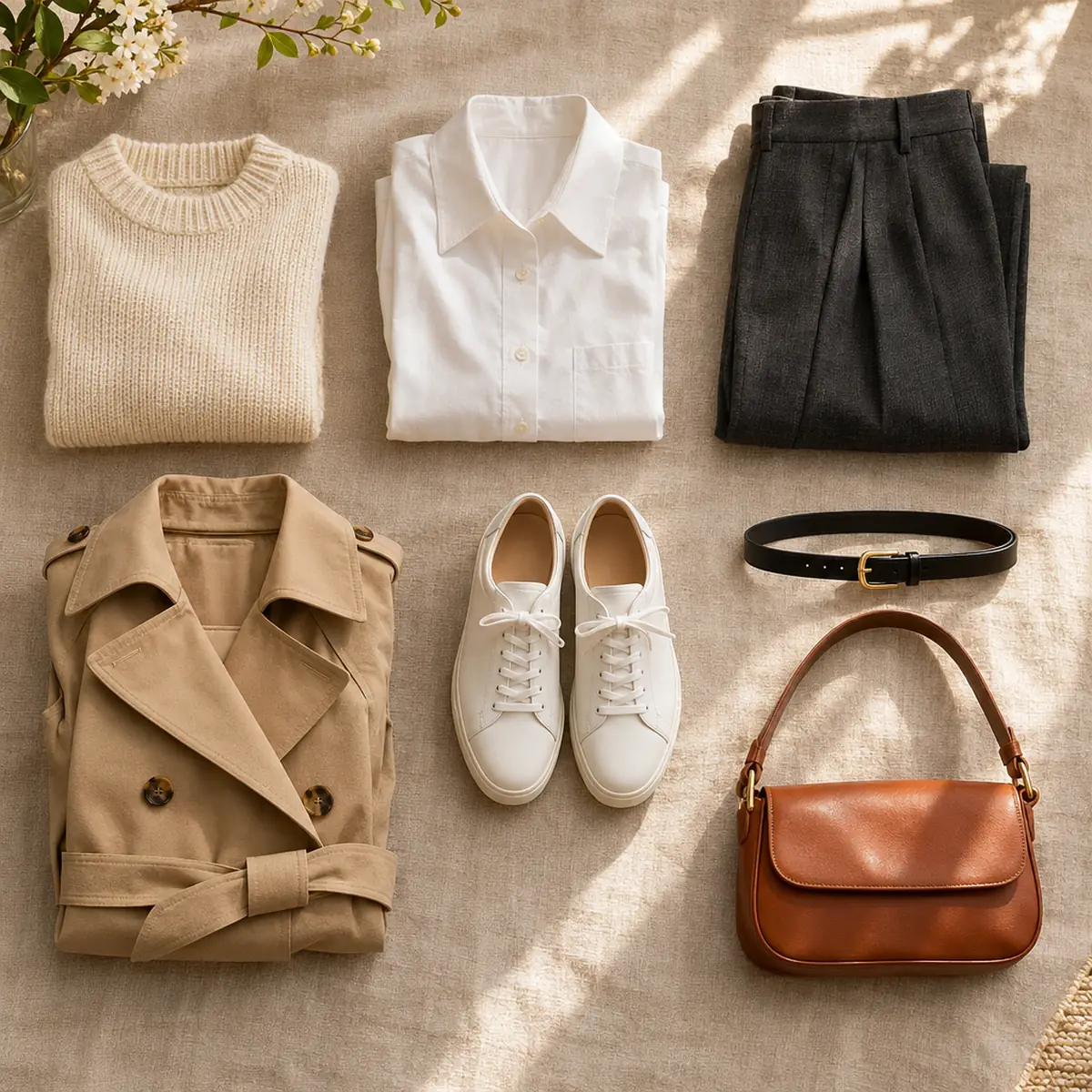
For a mild-season casual wardrobe, an example selection is six tops: two tees, two long-sleeve tops, one button-up shirt, and one blouse. Add four bottoms: jeans, casual trousers, smarter trousers, and a skirt. Include one dress, two knits, two outer layers, and three pairs of shoes. That makes eighteen pieces, with underwear, sleepwear, exercise kit, and specialist equipment counted separately for this example.
The number is illustrative, not a challenge. Replace the skirt and dress with trousers if you never wear them. Add washable work tops if your week demands them. A parent dealing with frequent spills may need more duplicates; someone with a formal office may need tailoring instead of a casual jacket. Do not under-equip your routine just to satisfy a tidy count.
Test complete outfits, including the awkward parts
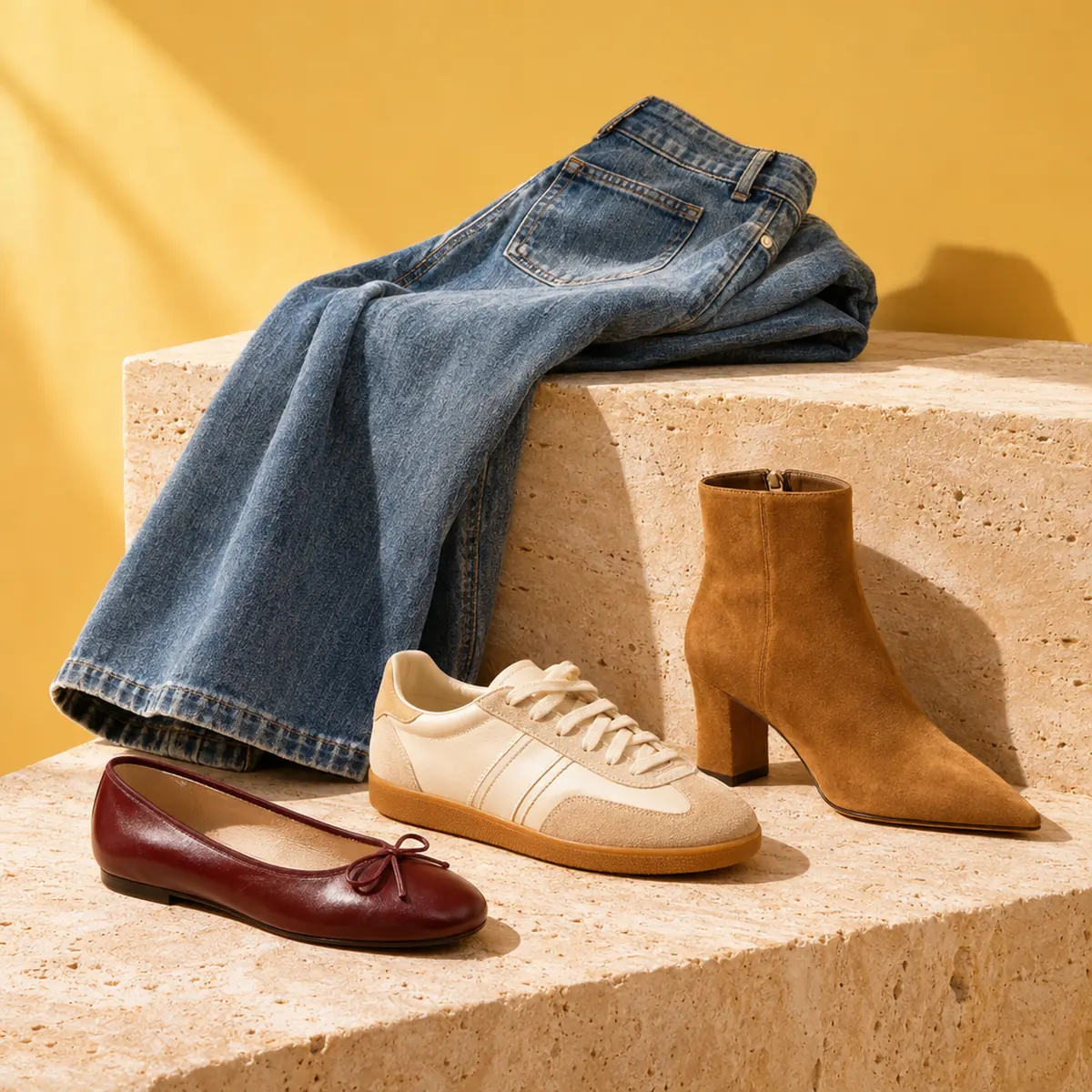
Pick one bottom and pair it with each plausible top. Add shoes and an outer layer before calling a combination successful. A shirt may look fine with trousers in isolation but bunch uncomfortably under your only sweater. A jean hem may work with boots and drag with your everyday flats. These details determine whether pieces are genuinely interchangeable.
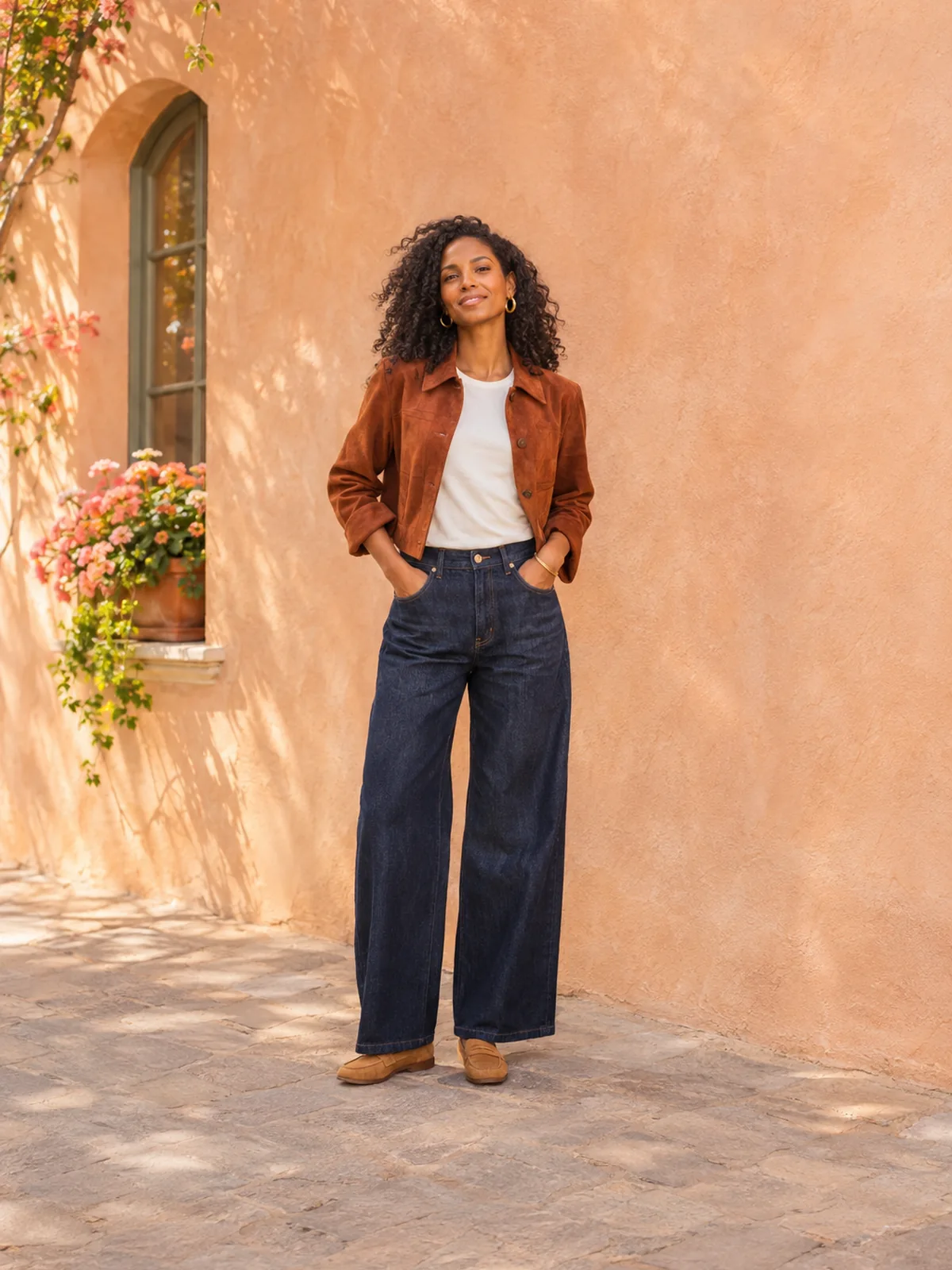
Aim to find several outfits you would willingly wear, rather than calculating every mathematical permutation. Photograph the successful ones with the accessories you use. If wide denim is one of your staples, our guide to how to style wide leg jeans helps check top lengths and hems. Do not buy a new shoe merely to make a theoretical combination count.
Make one outfit work harder with small changes
Take navy trousers and a cream shirt. With sneakers and an open overshirt, the combination can suit casual errands. With loafers, a belt if needed, and a knit over the shoulders or worn normally, it becomes a different-looking option for a relaxed lunch. Whether either works for your workplace depends on its rules, not on a claim that every basic can go anywhere.
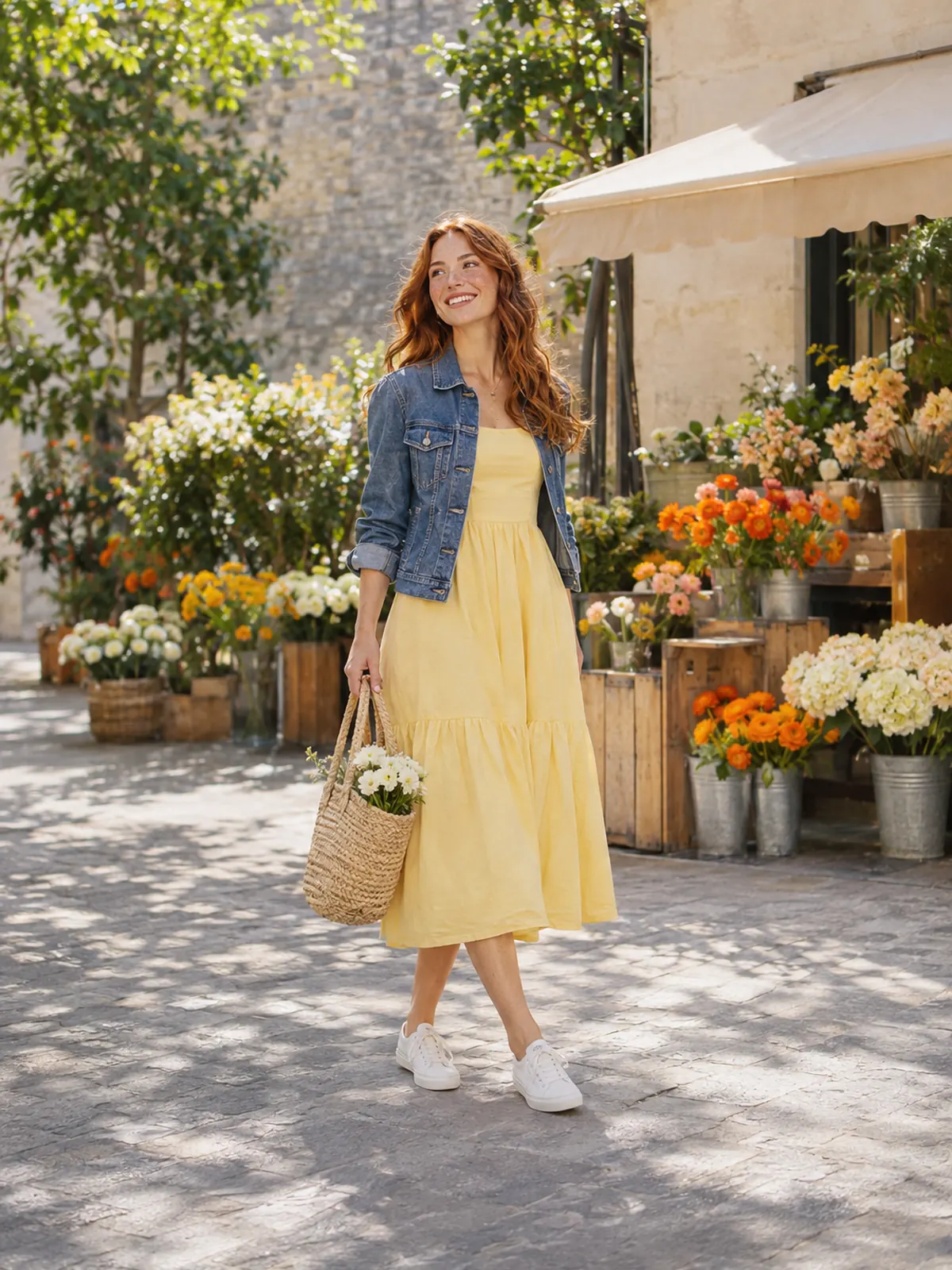
Use the same method with a simple dress: try a cardigan and flat boots, then a light shirt worn open and sandals when weather permits. Some pieces will remain occasion-specific, and that is fine. The purpose is reducing daily friction, not proving that every item has unlimited uses. Save your strongest combinations in a small album you can consult on busy mornings.
Identify gaps by the job they need to do
Write gaps as tasks, not product names. 'A closed shoe for rainy walks to work' is more useful than 'the perfect loafer.' 'A washable layer that fits under my coat' is more specific than 'another sweater.' Before shopping, check the stored pile, consider a repair, and see whether an existing piece can cover the task well enough.
When buying is justified, compare fit, care requirements, and compatibility with your actual outfits. A dry-clean-only top may be inconvenient if your routine depends on home laundry. A low purchase price is not useful if you never wear the item. Keep a short waiting list and revisit it after several wears of the capsule; recurring problems deserve priority over momentary boredom.
Read fiber information and care labels separately
Fiber content helps describe what a garment contains, but it does not by itself establish comfort, quality, or environmental impact. Construction, fabric weight, finish, and how you use the garment also matter. The FTC's textile-labeling guidance covers fiber-content disclosures; its care-label guidance addresses how garments should be maintained. Check both instead of treating 'natural' or 'synthetic' as a complete buying decision.
Plan for actual drying time and storage. If several essential tops need lengthy air drying, you may need more rotation room. Follow the individual care instructions rather than using one washing routine for everything. Mend a loose button before it disappears, and give clean garments suitable storage so they are ready when needed. Maintenance belongs in capsule planning, not after it.
Troubleshoot boredom, weather gaps, and changing needs
If the capsule feels dull, change the arrangement before adding another basic. Roll sleeves, try a different existing shoe, or bring back a patterned scarf you already enjoy. Our outfit ideas offer practical starting points for familiar pieces. If you dislike every combination despite liking individual items, revisit the palette and proportions rather than blaming yourself for lacking restraint.
If the forecast changes, rotate seasonally appropriate pieces into the active rail. If your size, mobility, job, or preferences change, rebuild around those needs. A capsule is a tool, not a contract. Keep enough comfortable clothing for your current body and routine. Forcing an old inventory to work can create more daily decisions than a slightly larger wardrobe would.
Review what happened after two weeks
Make a quick note of what you wore, what stayed untouched, and what you repeatedly wished you had. Distinguish genuine gaps from exceptional events: one unusually formal invitation may call for a separate occasion outfit, not a redesigned everyday wardrobe. Move useful stored pieces back in before purchasing replacements. Repeat the review when the season or your schedule changes, keeping the process small enough that you will actually do it.
Your questions, answered
How many items belong in a minimalist capsule wardrobe?
There is no required number. Start with enough clothing for your activities, weather, and laundry cycle, then remove genuine duplication only after testing what you wear. The eighteen-piece example is a worksheet, not a limit.
Does a capsule wardrobe have to use neutral colors?
No. Repeating colors and compatible patterns can make a colorful wardrobe easy to combine. Use shades you already enjoy wearing rather than replacing everything with a neutral palette.
Should I donate everything outside my capsule?
Not immediately. Store seasonal, occasional, and uncertain pieces separately while you test the capsule. This gives you time to identify what remains useful and avoids rushing into unnecessary replacements.
Sources & further reading
- US Environmental Protection Agency: Think Green Before You Shop
- Federal Trade Commission: Clothes Captioning—Complying with the Care Labeling Rule
- Federal Trade Commission: Threading Your Way Through the Labeling Requirements Under the Textile and Wool Acts
Sources support the factual guidance they address; aesthetic suggestions are editorial judgment, not claims of product testing.