To clean white sneakers, brush off dry dirt, identify each material, then hand-clean suitable surfaces with a little diluted mild soap and a soft cloth. Remove the residue and air-dry at room temperature. Suede, delicate trims, and special finishes need their own care instructions, so do not soak the whole shoe or reach for bleach.
This guide may contain affiliate links. As an Amazon Associate we earn from qualifying purchases. How our links work.
Start with the material, not the stain
A white sneaker can combine coated leather, knit mesh, suede panels, rubber, and glued decorations. The cleaning method that suits the rubber sidewall may mark the upper. Check the label inside the shoe and look up the manufacturer's instructions for that exact model before adding water. When the material is uncertain, start dry and stop before experimenting with a wet cleaner.
Nike's official shoe-cleaning guide recommends dry brushing, a mild solution, gentle hand-cleaning, and room-temperature drying. It also separates suede from smooth leather and knit. Those distinctions matter more than finding one powerful whitening recipe. In our gear guides, care starts with preserving the item you have, rather than making every surface look factory-new.
Look closely at the marks. Loose mud, a greasy spot, a rubber scuff, and yellowed material are different problems. Photograph a stubborn patch before working on it, so you can see whether a gentle pass helps. Do not treat cracking or peeling as dirt: further rubbing can remove more of the finish.
Set up a small, gentle cleaning kit
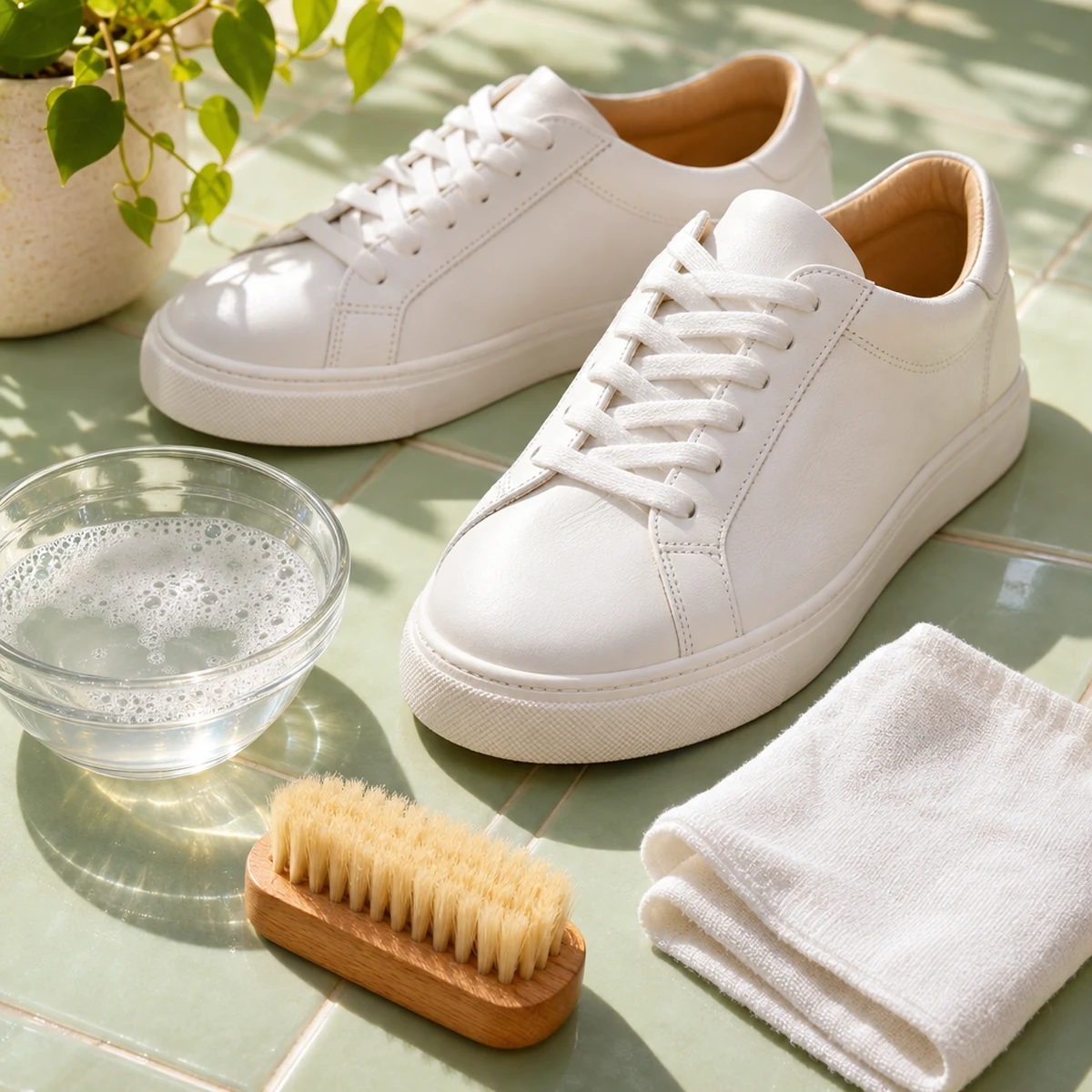
Gather a soft-bristled brush, two clean pale cloths, a bowl of lukewarm water, a little mild soap, and plain white absorbent paper. An old toothbrush can reach sole grooves, but dedicate it to shoes. Keep a separate brush or cloth for the uppers so grit from the outsole does not scratch them.
Use only a small amount of soap in plenty of water; the mixture should not feel thick or leave a slippery coating. Follow any dilution instructions on a suitable shoe cleaner. Test the mixture on a hidden area and let that patch dry before continuing. A wet patch can disguise discoloration that becomes obvious later.
Remove the laces and any removable insoles. Do not pull out an insole that appears glued down. Lay a towel under the work area and lightly support the shoe with paper without stretching it. Have a second bowl of clean water nearby for the cloth used to lift soap residue.
Dry-brush before you wet anything
Let wet mud dry, then gently loosen it over a bin. Work across the outsole and sidewall first, avoiding hard scraping around glued edges. Brush the upper with a clean, softer tool. Getting rid of loose grit now means you are less likely to rub it deeper into white fabric.
For a five-minute refresh before leaving home, stop here and wipe a suitable rubber sidewall with a barely damp cloth. Do not start a full wash if you need the sneakers immediately. Damp linings are uncomfortable, and rushing the drying stage with a radiator can turn a cosmetic problem into damage.
Hand-clean smooth leather or coated uppers
On a washable smooth upper, dampen a cloth with the diluted solution and work in small areas. Keep the cloth damp rather than dripping, particularly near seams, perforations, and the tongue. Use light pressure. A series of gentle passes is preferable to aggressive scrubbing across the same spot.
Lift loosened dirt and soap with a second clean, barely damp cloth. Pay attention to the edge where the upper meets the sole, because residue collects there. Blot with a dry cloth afterward. If the maker recommends a conditioner for that particular leather, use it as directed; a generic oily treatment can alter a white finish.
Abrasive cleaning erasers may dull coatings, remove paint, or leave a visibly different patch. They are not an automatic solution for leather scuffs. If you decide to use one on plain rubber with the manufacturer's approval, keep it away from stitching and decorated surfaces and test first.
Treat canvas, mesh, and knit with less force
For fabric that permits water cleaning, apply a little solution with a soft brush or cloth and gently follow the material's structure. Do not scrub a loose knit as though it were a tiled floor. Snags and fuzzy fibers can make a clean shoe look more worn than the original stain did.
Support thin fabric from inside while cleaning, without forcing the shape outward. Blot away the solution and repeat with a clean damp cloth. Avoid soaking the foam underneath. Persistent soap in the lining can attract grime and leave pale rings, especially if the shoe dries unevenly.
Canvas and mesh are not interchangeable with suede. Even a mostly textile shoe may have a suede toe or heel tab. Treat each panel separately. If cleaning only one patch leaves a visible boundary, reassess the care instructions before lightly working across the surrounding washable panel; adding more water blindly can worsen the ring.
Keep white suede on a separate track
For suede, begin with a dry suede brush and work gently with the nap. A suede eraser may help a small dry mark when the maker allows it. Test discreetly and brush away the residue. Do not apply the general soap-and-water method simply because the suede happens to be white.
Water, oils, and household mixtures can change suede's texture or color. A specialist cleaner intended for the material may be appropriate, but follow its instructions and the shoe manufacturer's guidance together. For a large oil stain, uneven dye, or a valuable pair, professional assessment is more sensible than repeating internet remedies.
Clean laces, soles, and insoles separately
Massage ordinary washable laces in a mild solution, rinse thoroughly, blot, and lay them out to dry. Decorative, leather, or coated laces may need different treatment. Frayed laces can be replaced without replacing the shoe; match their length and thickness so they sit comfortably through the eyelets.
Use the sole brush for the outsole and plain rubber sidewall. Keep dirty runoff away from the upper. For removable insoles whose instructions allow washing, clean gently and dry completely before returning them. Do not hide persistent dampness under a freshly cleaned footbed. If odor remains after proper cleaning and drying, consider whether the insole needs replacing.
Air-dry fully and troubleshoot what remains
Leave shoes in a ventilated spot at room temperature, away from direct heat and harsh sun. Loosely fill them with clean white paper and replace it if it becomes damp. Avoid printed paper that might transfer ink. Allow the tongue to open so air can reach the interior.
Drying time depends on construction, humidity, and how wet the shoe became; the outside feeling dry is not enough. Check inside the toe and under the insole before wearing. Nike advises against machine washing its shoes and warns about dryer heat. Other manufacturers may have model-specific exceptions, but those are not permission to machine-wash an unidentified pair.
If the shoes dry with yellow patches, pause. Trapped residue, old glue, or material aging can look similar, and another dose of cleaner may not fix the cause. Avoid chlorine bleach and do not mix household chemicals. Repeat only a care-approved mild step when you can identify remaining surface dirt.
Keep the result wearable, not precious
Brush off dirt after muddy outings and deal with fresh splashes before storing the pair. Let shoes air out between wears and store them dry. A cleaner sidewall and tidy laces often make more visual difference than chasing every faint mark in the fabric.
When planning outfits, compare the sole shape as well as the color: our guide to shoes with wide-leg jeans explains why a neat low profile and a bulky trainer create different proportions. For outdoor-inspired looks, gorpcore style can accommodate practical footwear with visible signs of ordinary use.
Your questions, answered
Can I put white sneakers in the washing machine?
Only if the manufacturer explicitly permits it for that model. Otherwise hand-cleaning gives you more control over water, agitation, and mixed materials. Nike specifically recommends against machine washing its shoes.
Will cleaning make yellow soles white again?
Not necessarily. Surface dirt can lift, but aging, oxidation, or discoloration inside the material may remain. Do not assume stronger bleach will reverse it without damage.
Should I clean sneakers after every wear?
Usually a quick inspection and dry brush are enough. Clean visible dirt when needed, allow the shoes to air out, and avoid repeatedly saturating a pair that only needs a small spot clean.
Sources & further reading
Sources support the factual guidance they address; aesthetic suggestions are editorial judgment, not claims of product testing.